
WEEP AND SMILE
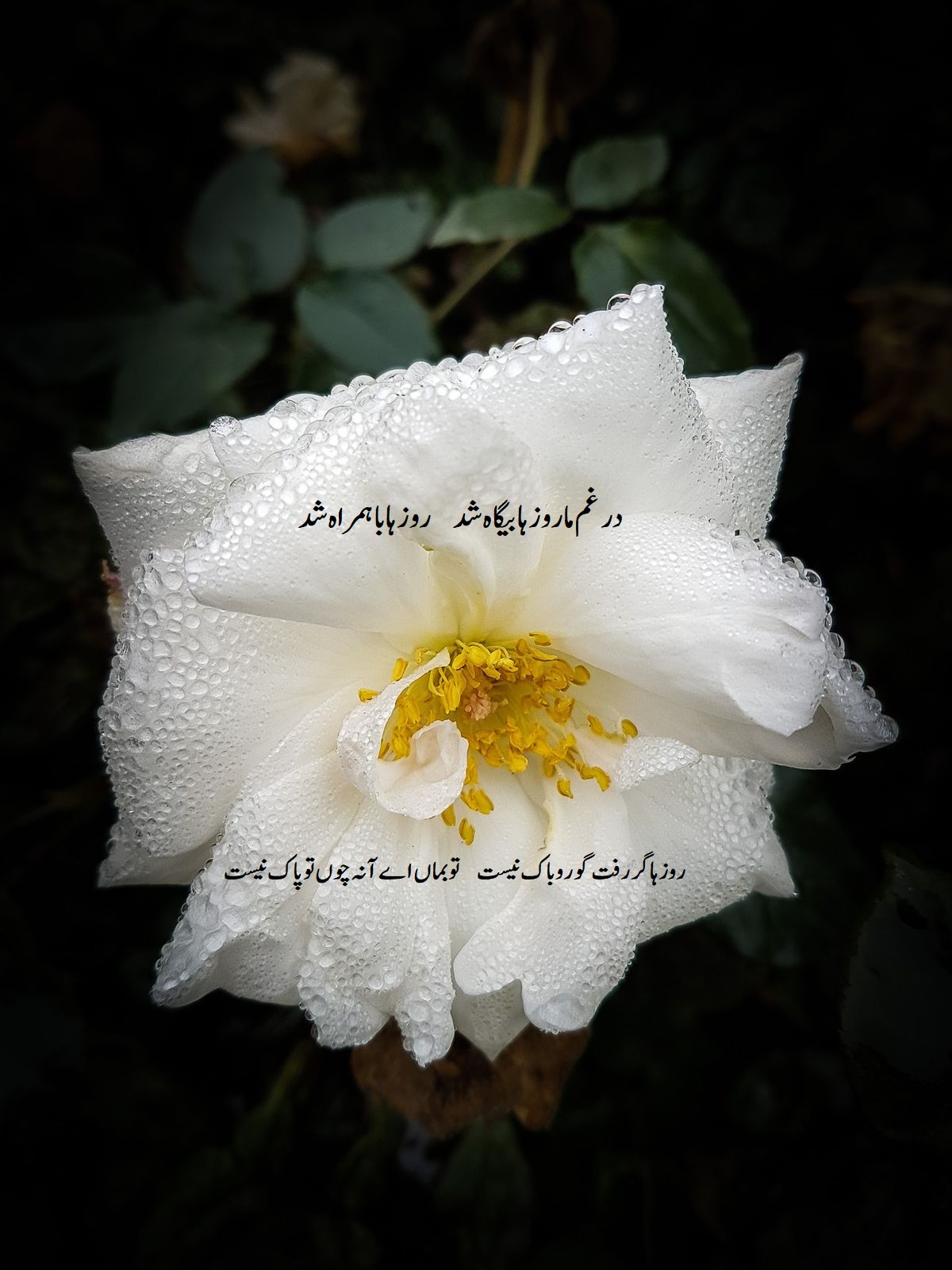
In our grief, many days became untimely/late (i.e., wasted, lost before their time)
Many days passed together (with that grief/longing)
Flowing English translation:
In our grief, many days have slipped away untimely,
Many days have passed in its company.
Or, capturing Hazrat Thanwi’s explanation:
In our sorrow, many days were lost before their time,
Many days departed as companions of that burning grief.
Commentary from Kaleed-e-Mathnawi:
This couplet and the one following it form a beautiful pair — the first expresses the pain of wasted time, and the second remedies that pain with the principle of gratitude and presence.
Mawlana Thanwi (Rahmatullahi alayh) explains:
- The sincere seeker (tālib-e-sādiq) is never satisfied — even after reaching a station (wasl), he continues to seek higher. Looking at the stations ahead, he considers his own state lowly. Looking back at his past life, he considers it wasted.
- The grief (ghamm) here is the grief of separation — the soul’s burning for its origin. But paradoxically, even this grief consumes time. The seeker laments: “So many days passed in this grief, yet I did not reach what I sought. Everything was spent in burning and melting, and nothing was gained.”
- Key insight: This is not despair — it is the humility of a lover of Allah. The lover of Allah always feels he has not done enough, has not arrived fully. This is a sign of sincerity, not failure.
If days have gone, go — do not fear/care
You remain — O you, that one like you (in purity) does not exist!
Flowing English translation:
If the days have gone — let them go, have no fear,
You remain — O you, the like of whom in purity is not found!
Or more freely:
If days have passed, let them pass — do not grieve,
Only you remain — O you whose purity has no equal!
Commentary from Kaleed-e-Mathnawi:
Mawlana Thanwi (Rahmatullahi alayh) points out a remarkable shift:
| Couplet 3 | Couplet 4 |
| Expresses regret over wasted days | Cures that regret |
| The seeker looks back and laments | The seeker is told: look at what remains, not what is lost |
| Grief over loss of time | Gratitude for the presence of the Beloved (love/‘ishq) |
The “you” (tū) addressed here — according to Hazrat Thanwi (Rahmatullahi alayh) — is the ‘ishq (intense love) itself, or the soul purified by that love. This love is:
- The original treasure (aslī daulat) — the true wealth that was given before time began.
- Pure and free from all defects — unlike the body and its temporal states, divine love is eternal and unblemished.
- Sufficient in itself — if divine love remains, the loss of days is insignificant. The days were going to pass anyway; the question is: what remained through them?
The subtle teaching:
- In the previous couplet, the seeker of divine union “lowered his own state” (apnī hālat ko past qarār diyā) — which is a form of tawāzu‘ (humility) and inkisār (brokenness). This is praiseworthy in the spiritual path.
- But there is a danger: excessive regret can turn into ingratitude (nā-shukrī) — denying the gift of love that Allah has placed in the heart.
- So, this couplet is a remedy — it prevents the seeker from falling into despair. “Your days may have passed, but your ‘ishq remains. And that is the real currency of the path.”
Combined reflection:
Mawlana Rumi (May his soul be sanctified) is teaching a delicate balance:
Grieve enough to stay humble, but not so much that you forget the treasure within you.
The days will pass, regardless. What matters is whether you carry the reed’s song — the living love — within your hollowed heart. That love is not subject to time. It is the rōzgār-e-wasl (time of intimate union) itself, present here and now.
Practical wisdom from Kaleed-e-Mathnawi:
- Do not dwell on the past — regret is useful only if it spurs action, not if it paralyzes.
- Recognize the gift of love — if you have even a flicker of love for Allah in your heart, that is the greatest treasure. Guard it. It is proof that your soul still remembers its origin.
- Move forward — the sincere seeker looks at the stations ahead, not the years behind.
- In the company of a guide — without the shaykh-e-kāmil, one may misread regret as failure. The guide teaches you when to weep and when to smile with gratitude.
(Munsha’ib)