
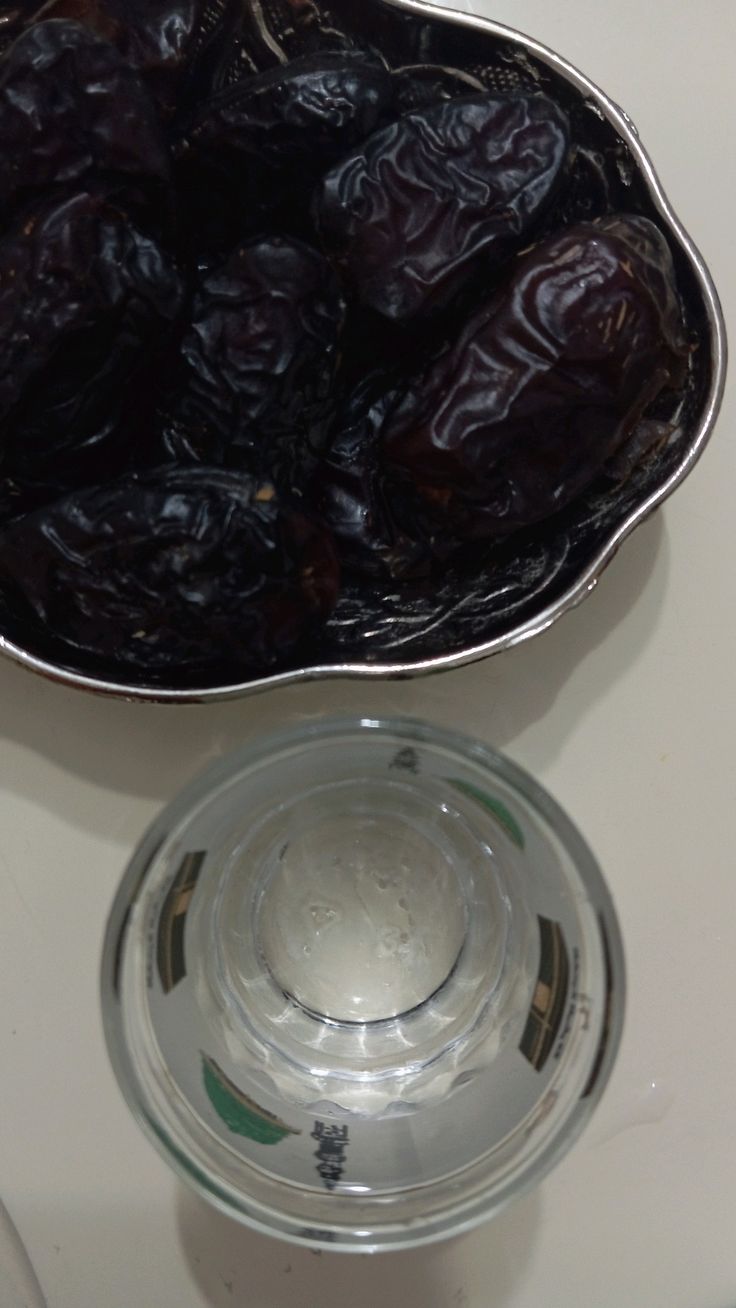
Two Occasions of Joy for the Fasting Person
In these two statements, viz. “Ramadhaan is Eid” and “Eid is Ramadhaan” the purport is not that one should eat abundantly in Ramadhaan and abstain from eating and drinking on Eid. Rather, correction of two mistakes is intended.
What is implied is that “O Listener! We do not regard over-burdening oneself in Ramadhaan or excessive indulgence on Eid to be the object and aim. Thus, We did not prohibit you from eating and drinking [in Ramadhaan] and neither did We give you permission to exceed the limits in eating and drinking [on the Day of Eid]. Where We have prohibited eating and drinking during Ramadhaan at one time [the day], We have permitted it at another time [the night].”
In fact, regarding the ‘other’ time, Rasulullah (Sallallahu alaihi wasallam) said:
لِلصَّآئِمِ فَرْحَتَانِ فَرْحَةٌ عِنْدَ فِطْرِه وَفَرْحَةٌ عِنْدَ لِقَآءِ رَبِّه
Translation: “For the fasting person there are two moments of joy; one at the time of Iftaar and the other when meeting his Rabb.”
From this we learn the desired nature and virtue of food at the time of Iftaar in a vastly superior and greater way than simple ijaazat or permission. [In other words, we were not merely granted permission to eat and drink upon sunset. We are, in fact, exhorted and encouraged to eat and drink at that auspicious time in the Sunnah manner.]
Thus, by not eating in Ramadhaan, which is what happens in Ramadhaan, you are having Eid. Had it not been for the fast, would you have experienced that much of pleasure and delight with the dates and water? Furthermore, the rewards of fasting will assume the form of an Eid in the Aakhirat, regarding which is stated:
كُلُوْا وَاشْرَبُوْا هَنِيْئًام بِمَآ اَسْلَفْتُمْ فِي الْاَيَّامِ الْخَالِيَةِ
Translation: “Eat and drink with relish by virtue of the deeds you carried out in the past [i.e. in the world].”
Thus, for the completion of the Essence of Eid two types of nourishment are bestowed to the fasting person; one at the time of breaking the fast [the physical nourishment] and the other is spiritual, which is Tawajjuh Ilallaah or one’s gaze being directed to Allah Ta’ala and His Closeness [as the fasting person expresses his heartfelt gratitude to Allah Ta’ala for the blessings of food and drink at the time of Iftaar].
Then, the joy of completing the day’s fasting adds to the joy at the time of Iftaar. That joy is the result of remaining hungry and thirsty for the day. Thus, fasting is spiritual nourishment. Had a person broken his fast during the day and remained hungry [i.e. after having broken his fast he did not consume anything], he would not have had that joy at all as in fasting.
Above all, is the spiritual nourishment which Rasulullah (Sallallahu alaihi wasallam) himself mentioned:
فَرْحَةٌ عِنْدَ لِقَآءِ رَبِّه
Translation: “The second occasion of joy is when he [the one who kept fast] meets his Rabb.”
So, one is the joy of nourishment and the other the joy of meeting his Rabb. Ramadhaan is, therefore, Eid upon Eid. And this meeting with Allah Ta’ala is such that one will never be satiated.
يَزِيْدُكَ وَجْهُه حُسْنًا اِذَا مَا زِدْتَّه نَظَرًا
Translation: “The more you look at Him the more His beauty stands out.”
The condition of eternal pleasure in the Vision of Allah Ta’ala is such that:
| حسن ايں قصۂ عشق ست دفتر نمی گنجد | قلم بشکن سياہی ريزو کاغذ سوز و دم در کش |
Translation: “Break the pen, spill the ink, burn the paper and keep quiet. This is the beauty of the story of love which cannot be translated into words.”
(Awdul Eid)