
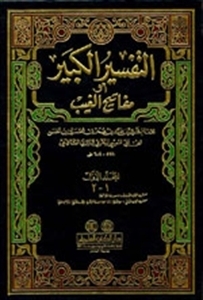
Introducing the Tafseer of Imaam Fakhrud Deen Ar-Raazi (Rahmatullahi Alayh)
Imaam Fakhrud-Deen Ar-Raazi (d. 606 AH/1210 CE), in the introduction to his monumental Tafsīrul-Kabīr (Mafātīḥul-Ghayb), begins with a profound and eloquent passage that serves as both a spiritual invocation and a methodological preface. Below is a detailed breakdown of its themes, structure, and significance:
1. Opening Basmalah & Hamdalah
He begins with:
بِسْمِ اللّهِ الرَّحْمنِ الرَّحِيمِ
(In the name of Allah, the Most Gracious, the Most Merciful),
and:
الْحَمْدُ لِلّهِ
(All praise is to Allah),
following the Sunnah of starting with gratitude and divine remembrance.
- Tawfīq (Divine Enablement):
He praises Allah for granting him the ability (وَفَّقَنَا) to perform the best acts of obedience (afḍalut-ṭā‘āt) and to attain ultimate happiness (akmalus-sa‘ādāt). This reflects the Ash‘ari (following Imaam Abul Hasan Al-Ash’ari Rahmatullahi alayh) theological emphasis on Allah’s role in enabling human actions.
- Seeking Refuge from Shayṭān:
The phrase أَعُوذُ بِاللّٰهِ مِنَ الشَّيْطَانِ الرَّجِيمِ underscores the importance of spiritual protection before engaging in Qur’aanic exegesis, guarding against errors in interpretation.
2. Second Basmalah & Thematic Tafsīr of Sūratul-Fātiḥah
Imaam Raazi (Rahmatullahi Alayh) repeats the Basmalah and embeds a poetic, thematic (denoting the theme) commentary on Sūratul-Fātiḥah, linking each verse to broader theological and existential concepts:
- الْحَمْدُ لِلّٰهِ رَبِّ الْعٰلَمِينَ:
Praise is due to Allah as the Lord of all worlds, encompassing all entities (thawāt) and attributes (ṣifāt). This hints at his later philosophical discussions on Allah’s universality.
- الرَّحْمنِ الرَّحِيمِ:
Allah’s mercy is specifically directed towards those in need (aṣḥābul-ḥājāt) and the desperate (arbābuḍ-ḍarūrāt), emphasizing divine compassion.
- مَالِكِ يَوْمِ الدِّينِ:
On Judgment Day, Allah will elevate the righteous (al-abrār) and punish the wicked (al-fujjār), reinforcing eschatological (relating to death, judgement, and the final destiny of the soul and of humankind) justice.
- إِيَّاكَ نَعْبُدُ وَإِيَّاكَ نَسْتَعِينُ:
Worship and seeking help are tied to fulfilling religious obligations (taklīfāt), reflecting the interplay between human effort and divine aid.
- اهْدِنَا الصِّرَاطَ الْمُسْتَقِيمَ:
A plea for guidance (hidāyah) in all its forms—intellectual, spiritual, and moral—away from the paths of the misguided (al-maghḍūb ‘alayhim) and the ignorant (ahlul-jahālāt).
3. Salawāt upon the Nabi (Sallallahu Alayhi Wasallam)
Imaam Raazi (Rahmatullahi Alayh) sends blessings upon Nabi Muhammad (Sallallahu Alayhi Wasallam), described as:
- المؤيد بأفضل المعجزات والآيات (Supported by the greatest miracles and divine signs), highlighting the Qur’aan’s miraculous nature, a key theme in his tafsīr.
- Extends blessings to Rasulullah’s family and companions, tying their status to the continuity of divine revelation (تعاقب الآيات).
4. Declaration of the Book’s Purpose
He introduces his work as:
- كتاب مشتمل على شرح بعض ما رزقنا الله تعالى من علوم سورة الفاتحة
(A book explaining some of the knowledge Allah has granted us about Sūratul-Fātiḥah).
Sūratul-Fātiḥah is the foundation of the Qur’aan, and Imaam Raazi’s focus on it signifies its centrality in Islamic thought.
- طلب التوفيق (Seeking divine assistance): humbly asks Allah to help him complete the work and grant him honour in both worlds (ad-dārayn).
5. Closing Supplication & Structure
- خير موفق ومعين (Allah is the Best Enabler and Helper):
Reiterating reliance on Allah, a hallmark of scholarly humility.
- مرتب على مقدمة وكتب (Structured with an introduction and chapters):
Indicates the systematic approach of his tafsīr, which combines theology, philosophy, linguistics, and jurisprudence.
Key Takeaways from the Introduction:
- Theological Framework: Imaam Raazi’s Ash‘ari creed is evident in his emphasis on divine tawfīq (enablement) and predestination.
- Philosophical Depth: His gloss (brief notation) on Al-Fātiḥah subtly introduces themes he expands later—divine attributes, human responsibility, and eschatology.
- Methodology: The structured approach reflects his goal to address tafsīr holistically, integrating ‘aql (reason) and naql (revelation).
- Spiritual Humility: Despite his intellectual stature, he begins with supplication, acknowledging human dependence on Allah Ta’ala.
This introduction sets the stage for Mafātīḥul-Ghayb, a work renowned for its analytical depth and encyclopaedic scope, blending kalām (theology), uṣūlul-fiqh (legal theory), and tafsīr, into a unified exegetical masterpiece.
(Munsha’ib)